
Continuing from last time, this is a report on the GDC session.
The Musical Brush: The Interactive Music of 'Concrete Genie'
Samuel Marshall (Composer and Audio Director, Sony Interactive Entertainment, Pixel Opus)
This session will cover the upcoming releases from Sony Interactive Entertainment this spring.Concrete GenieA presentation on sound production titled ``Sound Production'' was held. Concrete Genie is a very Sony-like game, with beautiful visuals and a story about a young boy who gains the power to draw mysterious pictures with a magic brush, and through the bullying and adventures of those around him, he becomes an adult and saves a deserted town.
composer'sSamuel MarshallHe is a composer and audio director at a Sony studio in the Bay Area called PixelOpus, and rather than simply providing music, he focused on how to incorporate sound and music interactively into gameplay. However, when he first presented his demo, he was told that all of the almost hour-long music he had submitted was destroyed at once, and he was at a loss because he didn't know how to respond.
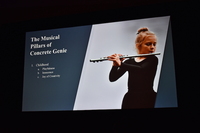
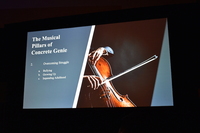
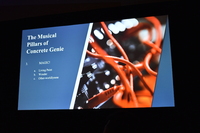
Samuel also played the sound while showing me the Protools session file screen with the stems lined up. It was interesting that the session itself had many detailed playback point markers, but what surprised me even more was the high quality of the sound. The day before that, there was a session at the same venue where we reviewed the demo songs of the participants, and the sound quality of Samuel's music was very different from the demo songs of the various participants. I think this is because the sound sources of the demo session participants had a large number of sounds or were overly compressed mixes, but in Samuel's case, I think he succeeded in keeping the sound fresh by not going too far.
Once again, I was able to talk to Samuel for a bit after the presentation, so I asked him if he had any music releases as an artist other than game music, but he told me that he currently has tight deadlines at work and is having a hard time finding time for personal production. However, I received an odd answer, saying, ``If I had the chance to make one, it would probably be a rock piece with me playing the guitar.'' I wasn't sure whether they were serious or joking (lol)
The Music of 'BATTLETECH': Big Sound on a Budget
Jon Everist (Composer, Everist Sound, LLC)
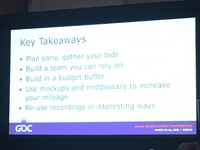
I was looking forward to this the most out of all the composer-related sessions, but I misunderstood the start time and made the mistake of entering the venue after about a third of the session had passed. This session will be based in Seattle.Jon EveristHe was in charge of the music based on the idea of ``how to balance a hybrid of sampled sound source mockups and a live orchestra to create the maximum effect within a tight budget.''BATTLETECHIt was an ambitious and practical presentation, using the title as an example.
I will refrain from writing about this session in detail because I started listening to the story midway through and there were some parts that didn't make sense to me, but one thing that really impressed me was the way they built the live orchestra by fleshing out the data recorded with Away and Far with sample sound sources, and used the live recording part like the wet component of the reverb. I hear that in projects with huge budgets, each section is recorded separately and changes are made or the balance is changed for each stem, but I thought this method was a big change in thinking that could only be done on a project with a small budget. The way the presentation was done was also very good, as they alternated between the recorded raw data and the completed mix fleshed out with sound sources, and played it back along with studio footage of the actual orchestra playing, allowing us to hear the difference.
By the way, the GDC session will be held at a later date.GDC VaultIt seems that this session will be uploaded to an archive, so I would like to take a closer look at this session at a later date.
to be continued
The Musical Brush: The Interactive Music of 'Concrete Genie'
Samuel Marshall (Composer and Audio Director, Sony Interactive Entertainment, Pixel Opus)
This session will cover the upcoming releases from Sony Interactive Entertainment this spring.Concrete GenieA presentation on sound production titled ``Sound Production'' was held. Concrete Genie is a very Sony-like game, with beautiful visuals and a story about a young boy who gains the power to draw mysterious pictures with a magic brush, and through the bullying and adventures of those around him, he becomes an adult and saves a deserted town.
composer'sSamuel MarshallHe is a composer and audio director at a Sony studio in the Bay Area called PixelOpus, and rather than simply providing music, he focused on how to incorporate sound and music interactively into gameplay. However, when he first presented his demo, he was told that all of the almost hour-long music he had submitted was destroyed at once, and he was at a loss because he didn't know how to respond.
So, he first enumerated the elements that should be expressed from the game's story, created sounds, fragmented melodies, small songs, etc. that clearly represented those elements, and by playing these interactively as stems, he aimed to create music that changes in a multilayered manner. For example, the joy of drawing and the sound that expresses the boy's personal growth are played simultaneously, and the combination of these makes it possible to express complex emotions. He named the system, which allows the music to change interactively in the same way as the pictures drawn, as The musical brush chime system.
He also complained about loop playback while playing, which is a common practice in game music. ``If the music is always playing, and if the sound is too loud, the music itself loses its power and impact. Don't be afraid to stop the sound. Create a perfect ending to your song.'' I fully agree with this opinion and challenge, and if music is played in situations that are unnecessary or unwanted, people's feelings towards music will only become more disgusting. Personally, I believe that in order to increase the value of music or to make people more interested in music, it is necessary to reduce the meaningless and unnecessary background music that is played all over the city. Going back to the story, he said that he created the game with the understanding that ``the introductory part, where the music enters from silence, is the most important part that can have the most impact on the player.''
Samuel also played the sound while showing me the Protools session file screen with the stems lined up. It was interesting that the session itself had many detailed playback point markers, but what surprised me even more was the high quality of the sound. The day before that, there was a session at the same venue where we reviewed the demo songs of the participants, and the sound quality of Samuel's music was very different from the demo songs of the various participants. I think this is because the sound sources of the demo session participants had a large number of sounds or were overly compressed mixes, but in Samuel's case, I think he succeeded in keeping the sound fresh by not going too far.
Once again, I was able to talk to Samuel for a bit after the presentation, so I asked him if he had any music releases as an artist other than game music, but he told me that he currently has tight deadlines at work and is having a hard time finding time for personal production. However, I received an odd answer, saying, ``If I had the chance to make one, it would probably be a rock piece with me playing the guitar.'' I wasn't sure whether they were serious or joking (lol)
The Music of 'BATTLETECH': Big Sound on a Budget
Jon Everist (Composer, Everist Sound, LLC)
I was looking forward to this the most out of all the composer-related sessions, but I misunderstood the start time and made the mistake of entering the venue after about a third of the session had passed. This session will be based in Seattle.Jon EveristHe was in charge of the music based on the idea of ``how to balance a hybrid of sampled sound source mockups and a live orchestra to create the maximum effect within a tight budget.''BATTLETECHIt was an ambitious and practical presentation, using the title as an example.
I will refrain from writing about this session in detail because I started listening to the story midway through and there were some parts that didn't make sense to me, but one thing that really impressed me was the way they built the live orchestra by fleshing out the data recorded with Away and Far with sample sound sources, and used the live recording part like the wet component of the reverb. I hear that in projects with huge budgets, each section is recorded separately and changes are made or the balance is changed for each stem, but I thought this method was a big change in thinking that could only be done on a project with a small budget. The way the presentation was done was also very good, as they alternated between the recorded raw data and the completed mix fleshed out with sound sources, and played it back along with studio footage of the actual orchestra playing, allowing us to hear the difference.
Since Jon works as a freelancer, I have a lot of sympathy for him, but when I heard his story, I felt a closer affinity with him because he was originally active as a rock and electronic music musician. I later learned from a Japanese composer who also lives in Seattle and is very active that Jon often hosts parties in his hometown so that composers in the same industry can get together and exchange information. It was such a wonderful presentation that you could really get a feel for his personality as you listened to him talk.
By the way, the GDC session will be held at a later date.GDC VaultIt seems that this session will be uploaded to an archive, so I would like to take a closer look at this session at a later date.
to be continued